YOLO enables machines to see and understand their surroundings in real time, while ARMxy brings this vision to life, turning detection results into actionable insights across industries.
Case Details
So, what exactly is YOLO?YOLO stands for
You Only Look Once. As the name suggests, it’s an
object detection algorithm.
In simple terms, it enables computers to “see” things like humans do, and to understand:
-
What it is (a person, car, cat, dog, etc.)
-
Where it is (by drawing a bounding box).
The difference is:
👉 Human eyes scan objects one by one, while a computer can “see the whole picture at once” and make instant judgments.
That’s why YOLO is often called the quick-draw hero of machine vision.

The Principle of YOLO
Don’t worry—the principle isn’t that complicated. Let’s use a simple analogy 👇
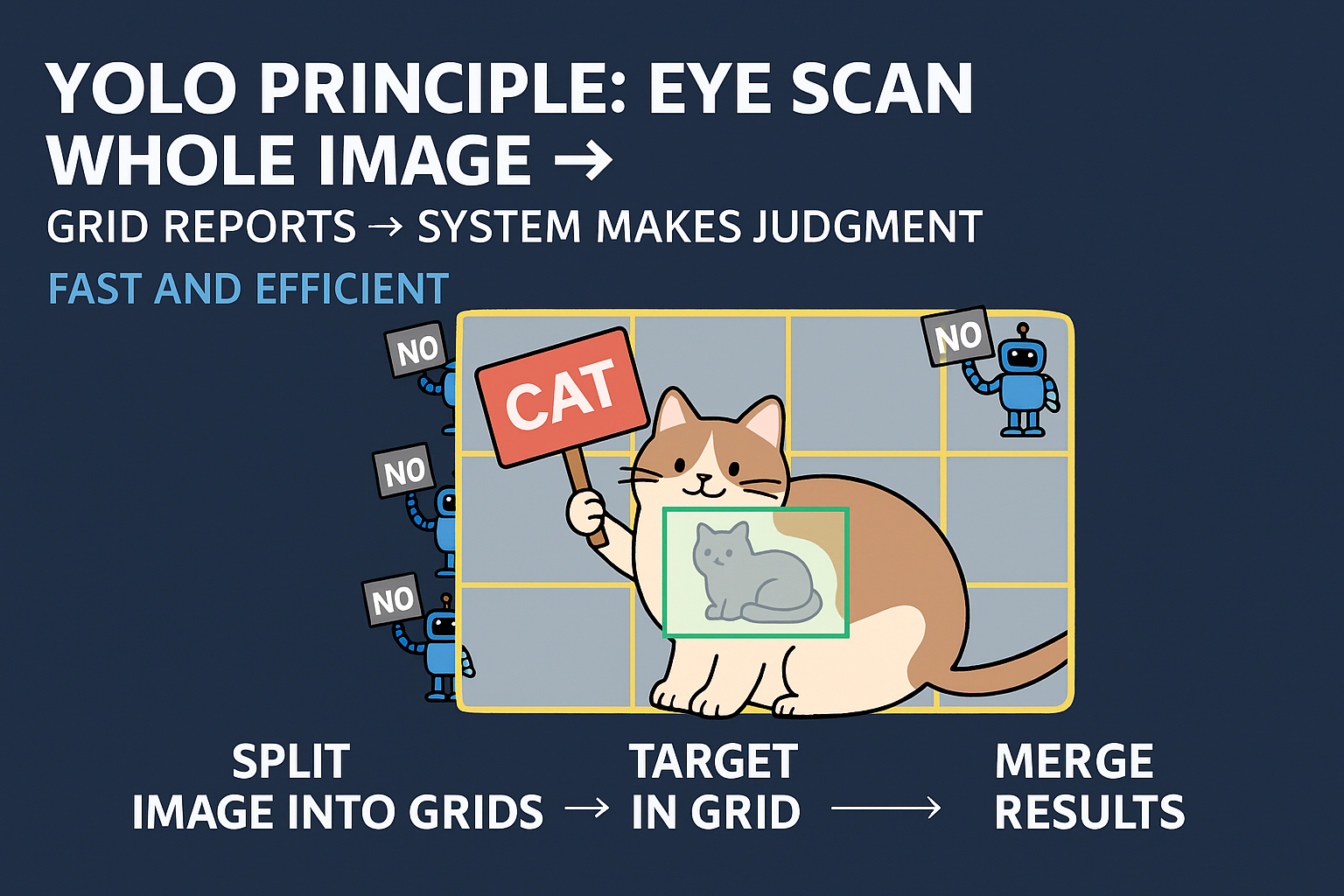
1.Dividing the image into grids
like cutting a photo into a tic-tac-toe nine-square grid, where each cell is responsible for watching over its own small area.
2.Detecting objects inside the grids
If a cell contains an object (say, a cat), it will tell the system: "There’s a cat here, in this spot."
3.Merging the results
The system then collects all the reports from the cells, removes duplicates or errors, and keeps only the most accurate detection results.
This is the idea behind YOLO: scan the whole image at once → each grid reports → the system makes a decision.
Compared with traditional methods, it is both faster and more efficient.
What Can YOLO Do?
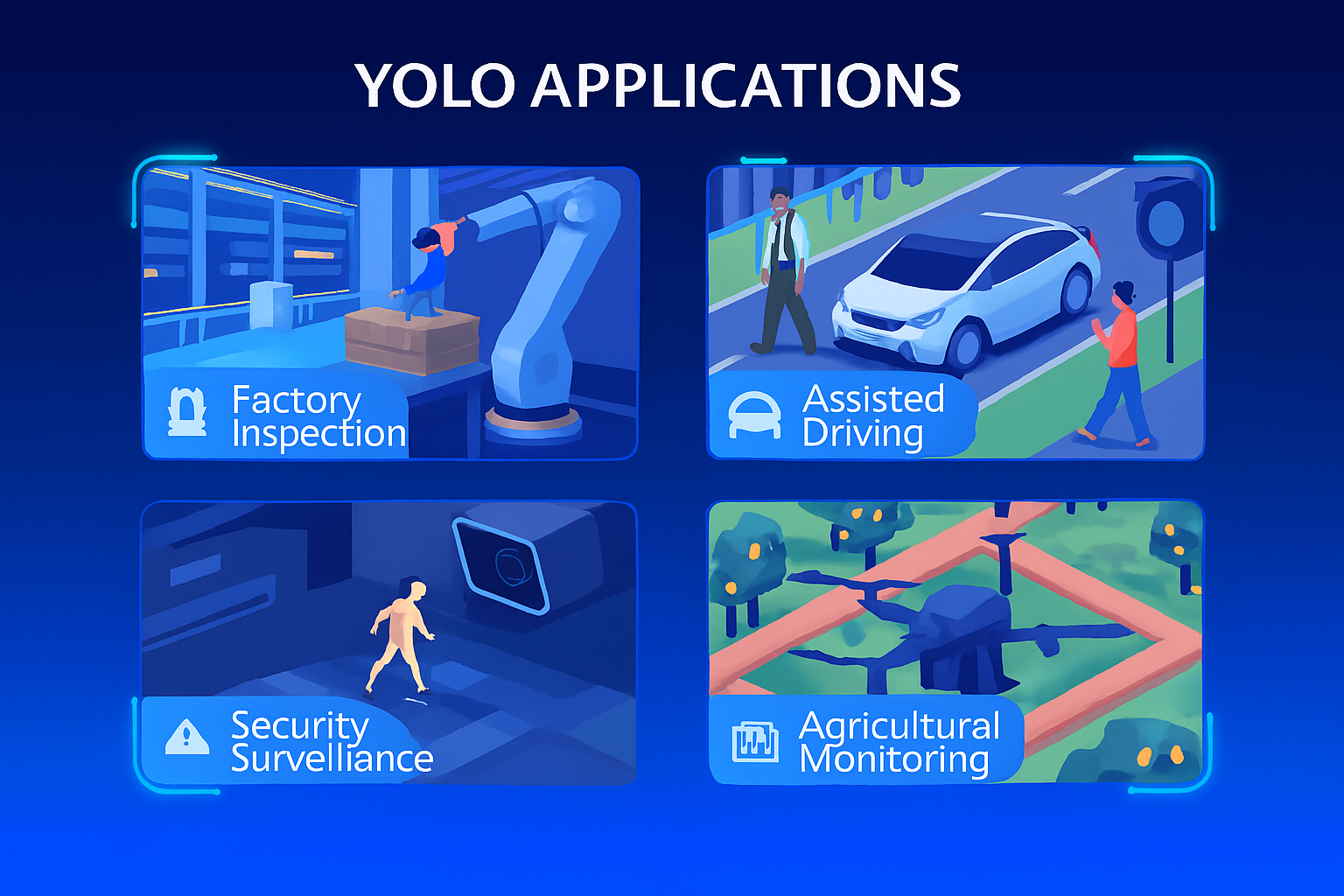
The applications of YOLO are almost everywhere:
-
In factories: detecting product defects
-
In traffic: recognizing people, vehicles, and traffic lights to support autonomous driving
-
In security: spotting abnormal behaviors and triggering timely alerts
-
In agriculture: counting fruits and checking crops for pests or diseases
-
In healthcare: helping doctors identify lesions in medical images
In short: anytime “seeing” is needed, YOLO can come into play.
How Is YOLO Different from Other Software?
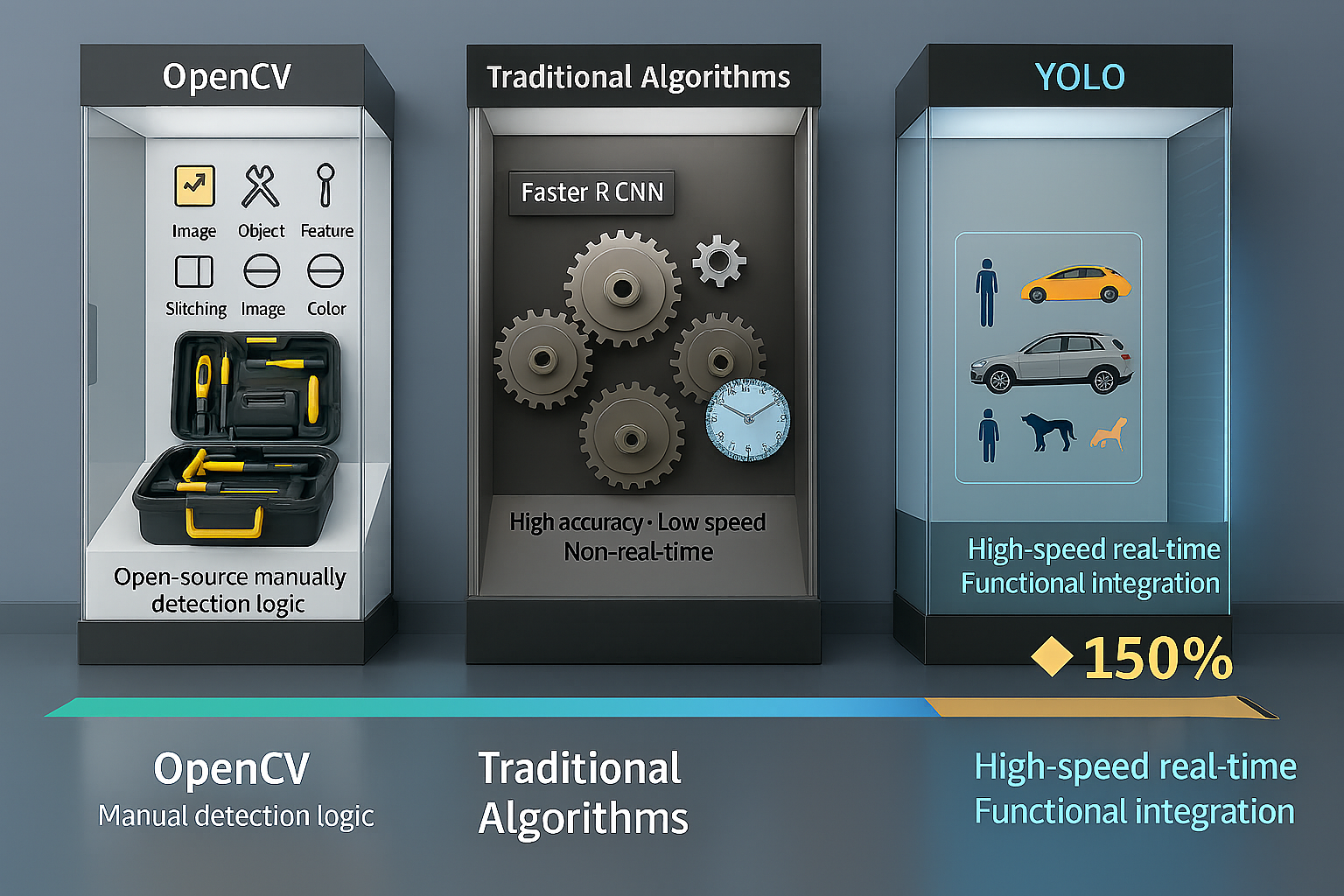
Many people ask: What’s the difference between YOLO, OpenCV, and other algorithms?
-
OpenCV: Think of it as a “toolbox” — it can handle image processing, filters, and edge detection, but you need to build the detection logic yourself.
-
Traditional detection algorithms (like Faster R-CNN): They achieve high accuracy, but are relatively slow and not suitable for real-time applications.
-
YOLO: Fast and powerful, making it especially suitable for real-time recognition.
That’s why in many industries, when it comes to object detection, YOLO is often the first choice.
YOLO + ARMxy: Real-World Machine Vision
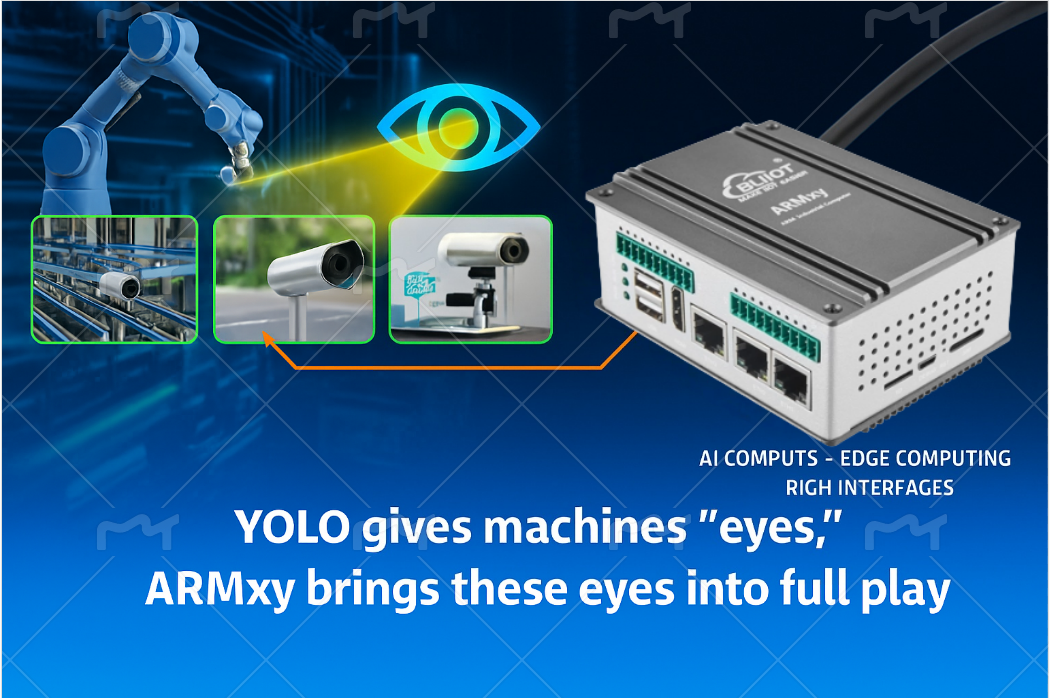
Of course, even the most powerful algorithm needs the right “platform.” In industrial settings, most equipment doesn’t have a strong GPU and cannot run complex vision algorithms directly.
This is where Shenzhen Beilai Technology Co.,Ltd.’s ARMxy series industrial computers and edge computing gateways come in:
-
Built-in AI computing power (up to 6 TOPS): can run YOLO models locally.
-
Rich industrial interfaces (RS485, CAN, DI/DO, Ethernet, etc.): enabling data collection and coordinated control.
-
Node-RED platform integration: quickly connects YOLO detection results with cloud platforms or on-site devices.
-
Edge computing support: completes detection and response locally, reducing dependence on the network and cloud.
This means:
-
In factories, ARMxy can locally identify defective products and trigger removal.
-
In security, ARMxy can detect anomalies in real time and control alarm systems.
-
In energy storage, traffic, or other scenarios, ARMxy can seamlessly link YOLO’s vision results with on-site devices.
👉 With ARMxy, YOLO is no longer just an “algorithm layer”—it becomes a visible, usable, and controllable productivity tool in industrial settings.
From factories to streets, from security to healthcare, YOLO is everywhere.
It turns machines from being “blind” into devices that can quickly understand the world.
That’s why we say — YOLO is the inevitable path for machine vision.
In the future, as algorithms improve and hardware advances, YOLO will become even more lightweight, running effortlessly on small embedded devices. At that point, it will be deeply integrated into our daily lives—so much so that we might not even realize we’re already benefiting from YOLO’s capabilities.
In industrial settings, Shenzhen Beilai Technology Co.,Ltd ARMxy series industrial computers and edge computing gateways are the key to bringing YOLO to life. With built-in AI computing power, rich interfaces, and edge computing capabilities, they can directly turn YOLO’s vision results into productivity.
👉 YOLO gives machines “eyes,” and ARMxy makes those eyes truly work.


