This article provides a comprehensive technical comparison between traditional PLCs and ARM controllers, using Beilai’s ARMxy series as an example, to offer reference insights for industry selection.
In-Depth Technical Comparison of Control Solutions in the Smart Equipment Industry: ARM Controller vs. Traditional PLC
I. Introduction
As the smart equipment industry advances toward digitalization, networking, and intelligence, the choice of control system has become a critical factor determining device performance. This article provides a comprehensive technical comparison between traditional PLCs and ARM controllers, using Beilai’s ARMxy series as an example, to offer reference insights for industry selection.
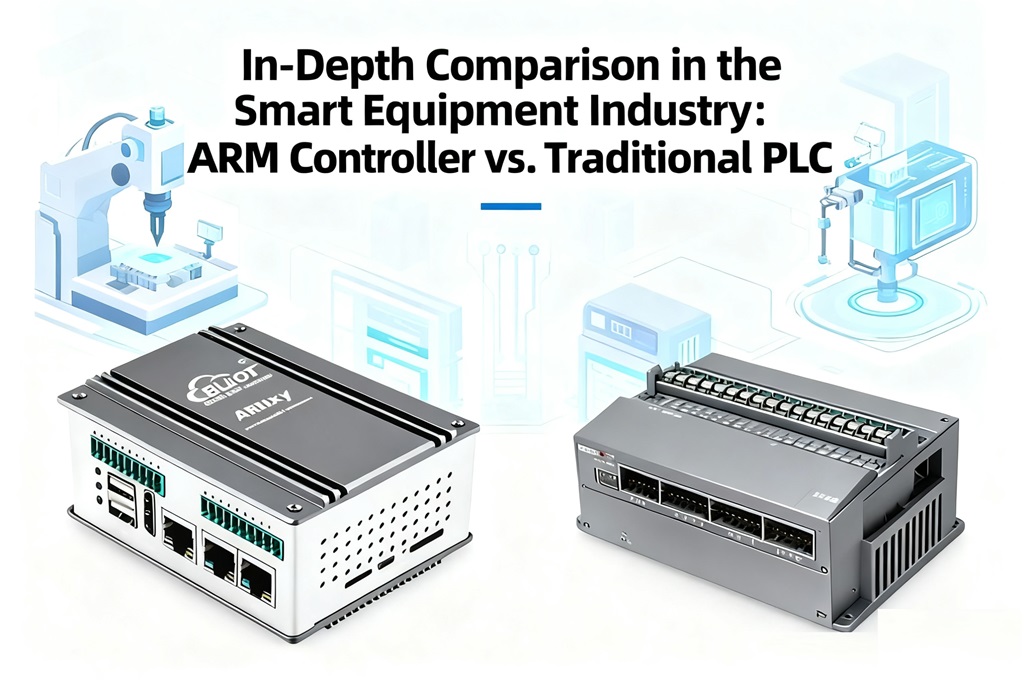
II. Core Technical Architecture Comparison
-
Hardware Platform Differences
Traditional PLC Solution:
-
Uses dedicated microcontrollers (e.g., ARM Cortex-M series)
-
Clock frequency typically below 500MHz
-
Memory configuration generally under 512MB
-
No dedicated AI acceleration unit
-
Limited I/O expansion capability, often requiring additional modules
ARM Controller Solution (e.g., BL370):
-
Utilizes high-performance application processors (industrial-grade RK3562J, quad-core Cortex-A53)
-
Clock frequency up to 2.0GHz
-
Standard 1-4GB LPDDR4X memory
-
Integrated 1TOPS NPU for AI computing
-
Modular X/Y series I/O boards for flexible configuration
-
1000+ I/O combinations, perfectly suited for smart equipment with fewer but diverse I/O requirements
-
Software Ecosystem Comparison
Traditional PLC:
-
Dedicated programming environment (ladder logic/instruction set)
-
Closed operating system
-
Limited third-party library support
-
Long development cycles and complex debugging
-
Requires on-site programming connections
ARM Controller:
-
Linux-based open-source ecosystem
-
Supports high-level languages like Python/C++/OpenPLC
-
Built-in Docker container support
-
Complete development toolchain
-
Node-RED visual programming support
-
Integrated BLIoTLink edge gateway for data acquisition, computation, and cloud connectivity
-
Unique QuickConfig remote operation platform: Supports remote configuration, debugging, and program updates
-
AI programming assistant: Automatically generates code, significantly reducing development barriers
III. Performance Comparison
-
Control Performance
-
Computing Performance
IV. Typical Application Scenarios
-
Traditional PLC Advantage Scenarios
-
Safety control (emergency stop, safety doors)
-
High-speed sequential control
-
Simple logic control
-
Harsh electromagnetic environments
-
ARM Controller Advantage Scenarios
-
Machine vision inspection
-
Predictive maintenance
-
Data acquisition and analysis
-
Edge computing tasks
-
Cloud-edge collaborative applications
-
Distributed devices requiring remote operation
-
Rapid prototyping and iterative development of smart equipment
V. Intelligent Operation and Development Advantages
Unique Advantages of ARM Controllers:
-
QuickConfig Remote Operation Platform
-
Supports remote device monitoring and diagnostics
-
Enables remote program updates and parameter configuration
-
Provides real-time visualization of device operational status
-
Supports batch management of multiple devices
-
AI-Assisted Development Features
-
Intelligent code generation supporting multiple programming languages
-
Automates repetitive coding tasks
-
Offers code optimization suggestions
-
Significantly improves development efficiency
-
Flexible I/O Configuration Solution
-
X/Y series expansion boards provide precise I/O configuration
-
Avoids I/O resource wastage common in traditional PLCs
-
Supports mixed signal type configurations
-
Perfectly adapts to diverse requirements of smart equipment
VI. Implementation Recommendations
-
Scenarios Recommended for ARM Controllers
-
New smart equipment development projects
-
Equipment upgrades requiring AI functionality
-
Multi-device networking and collaboration scenarios
-
Big data acquisition and analysis requirements
-
Distributed applications needing remote operation
-
Rapid prototyping and iterative development projects
-
Scenarios Where Traditional PLCs Remain Suitable
-
Pure logic control applications
-
Applications requiring SIL3 safety level
-
Extreme environmental conditions
-
Control tasks with extremely high real-time requirements
VII. Conclusion
Against the backdrop of the smart equipment industry’s transformation and upgrade, ARM controllers are emerging as the preferred solution for smart equipment control systems, thanks to their powerful computing capabilities, open software ecosystem, and intelligent operation and development experience. In particular, the QuickConfig remote operation platform and AI-assisted programming features offered by Bliiot’s ARMxy series controllers greatly enhance development efficiency and operational convenience. Their flexible X/Y series I/O expansion solutions perfectly meet the specific needs of smart equipment for fewer but diverse I/O points. While traditional PLCs will continue to hold value in specific areas, ARM controllers demonstrate strong competitiveness in the smart equipment field of their unique advantages.
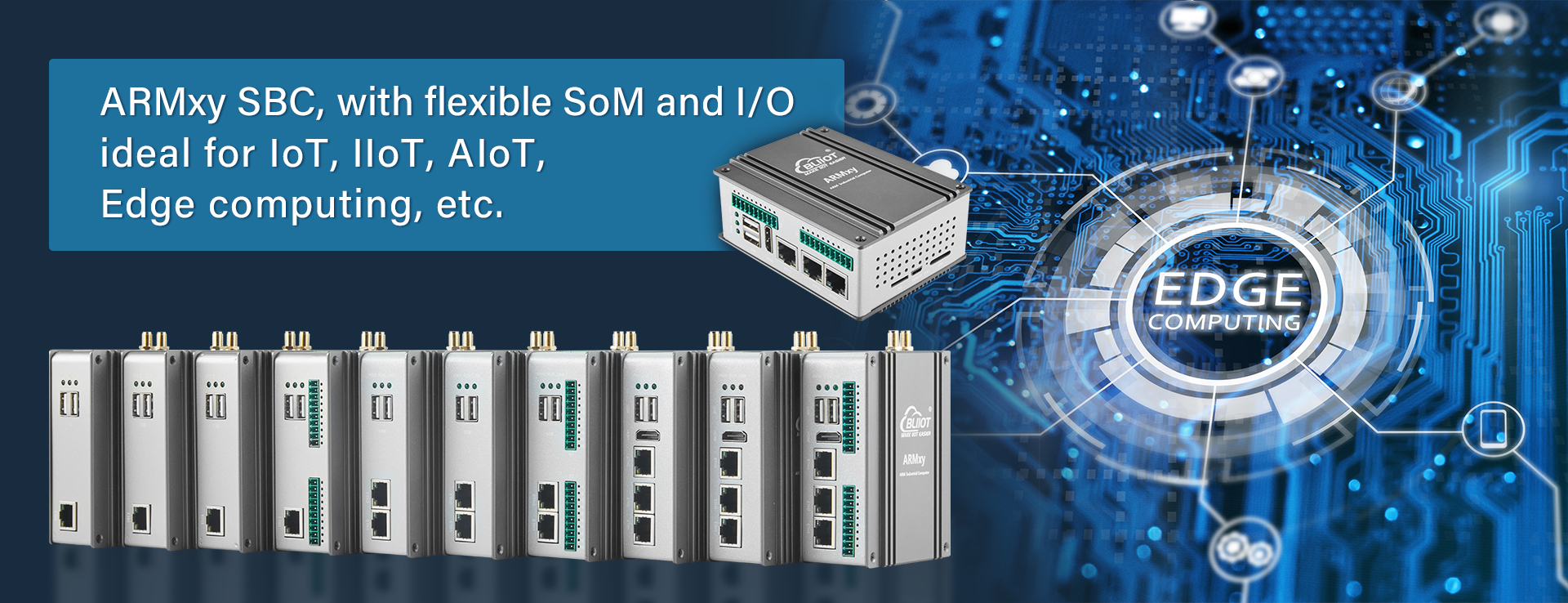
(The technical parameters in this article are based on actual test data of Beilai Technology’s ARMxy BL370 series controllers.)


