Although both Node.js and Node-RED are based on JavaScript, their positioning and use cases are fundamentally different. The BL118 is a powerful industrial IoT implementation of Node-RED, particularly suited for fast deployment, multi-protocol support, and high-reliability edge computing.
Differences Between Node.js and Node-RED
Although both Node.js and Node-RED are based on JavaScript, their positioning and use cases are fundamentally different. Here are their core distinctions:
1. Positioning and Use Cases
Node.js
-
A JavaScript runtime environment built on Chrome's V8 engine, enabling server-side JavaScript execution.
-
Used for building high-performance, scalable backend services (e.g., APIs, microservices, real-time applications).
-
Developers must manually write code, manage modules, dependencies, and low-level details.
Node-RED
-
A low-code/visual programming tool developed on Node.js, designed for IoT and event-driven applications.
-
Provides a graphical interface where users drag-and-drop nodes and connect them to create flows, with minimal coding required.
-
Ideal for rapid prototyping, automation tasks, or hardware integration (e.g., sensors, MQTT).
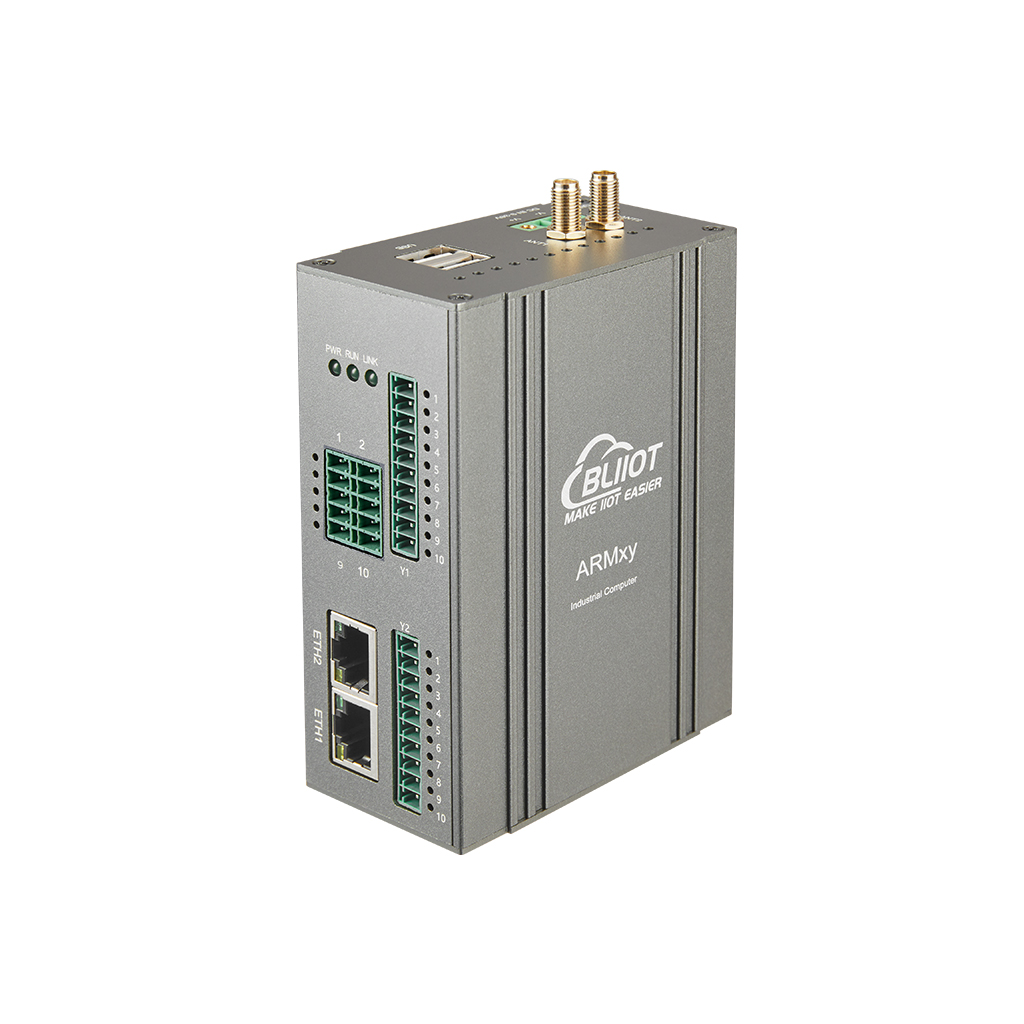
The BL118 Node-Red Gateway is a powerful industrial IoT implementation of Node-RED, particularly suited for fast deployment, multi-protocol support, and high-reliability edge computing.

2. Development Approach
Node.js
Node-RED
-
Uses a visual editor to drag-and-drop nodes (e.g., HTTP requests, MQTT, functions), configure parameters, and connect them—often without writing code (complex logic can embed JavaScript snippets).
-
Example: Dragging an HTTP Input node and a Debug Output node, then connecting them to create a simple API.
3. Suitable Scenarios
Node.js
-
General backend development (web apps, APIs, database interactions).
-
Scenarios requiring fine-grained control over performance, security, or complex business logic.
Node-RED
-
IoT device integration (e.g., Raspberry Pi, Arduino).
-
Quick automation tasks (e.g., web scraping, sending emails).
-
Enterprise system integration (connecting REST APIs, databases, MQTT, etc.).
4. Performance and Flexibility
Node.js
-
Higher performance, with direct low-level optimizations (e.g., thread pools, C++ add-ons).
-
Extremely flexible, suitable for custom development.
Node-RED
-
Performance depends on node quality; complex scenarios may require custom nodes (still needing Node.js knowledge).
-
Flexibility is limited by existing node libraries but enables rapid implementation of standard functions.
5. Ecosystem and Extensibility
Node.js
-
Boasts a vast npm ecosystem (over a million modules), allowing free integration of libraries (e.g., Express, Socket.io).
Node-RED
-
Extends functionality via node palette (e.g., node-red-dashboard for UI creation).
-
Community offers numerous pre-built nodes (e.g., IBM Watson, Home Assistant).
Analogy Summary
Collaboration Between the Two
Node-RED itself is built using Node.js, and the two can work together:
BL118 Node-RED Edge Gateway
The BL118 is a powerful industrial IoT implementation of Node-RED, particularly suited for fast deployment, multi-protocol support, and high-reliability edge computing. For developers familiar with Node.js, it offers a higher abstraction level, significantly lowering hardware integration barriers.
Key Advantages
✅ Out-of-the-box Node-RED support
✅ Industrial protocol compatibility (Modbus, OPC UA, MQTT, etc.)
✅ Edge computing capabilities (local data processing, reducing cloud dependency)
✅ Industrial-grade hardware design (wide temperature range, EMI resistance)
✅ Low-code development for efficiency
Ideal Use Cases: Industry 4.0, smart cities, energy monitoring, etc.


